
A new page where you can find all of our ideas, right in one place!
SIMPLE IDEAS:

Teachers get hungry when they stay on late for parents’ evening. Preparing simple sandwiches or toasties is a great way to serve their need.

A simple and effective idea and initiative from the Anglican Church in Salisbury to develop relationships between the church and their local school.


A great way to serve local schools is through prayer, asking for God’s blessing on the school, teachers and pupils as well as praying for their needs. You might worry how this might be received, but the majority of responses are positive.

Beginning something new is always a challenge and can often be exciting and scary at the same time. When you’re just 11 or 12 and are faced with the major change from primary to secondary school, and could be daunted by the prospect, then it isn’t such a bad idea to find out what the new life is going to involve.
Scripture Union (England & Wales) have produced a booklet called It’s your Move which is designed to give Primary 7 children the kind of information that will answer many of the questions they have about going to secondary school.

It all begins It is important to recognise that, when supporting a closing school, it is the school building that is closing and not the children’s lives! Carry on with the activities that you lead or help at, and keep building up the relationships you have with teachers and management. Healthy relationships mean that even though the school building is closing, your work is still appreciated and will continue to be appreciated at a different school (hopefully!).with an idea.

The office staff are the first point of contact in a school. To show your appreciation of their support you could provide a yearly Office Staff Meal at the Church.

In one church, members noticed that children were turning up to school in clothes that looked dirty, and when they asked they realised their families didn’t own a washing machine. So the church decided to buy one.

A great way to support and serve your local school is through prayer. From Shetland to Stranraer people are praying for schools, asking for God’s blessing on them, praying for their needs – and seeing answers to prayer. Pray for Schools Scotland has seen a tremendous increase in schools prayer over the past few years, with around 63% of Scottish schools are now registered as prayed-for.

In the ‘Practices and Traditions’ subsection of the Christianity strand in the Experiences and Outcomes of the RME curriculum in Scotland, you will find:
Through investigating the Christian communities in my local area, I am discovering how Christian communities demonstrate their beliefs through prayer, worship and special ceremonies. I am developing respect for the practices and traditions of others.
A great example of how the local church can assist in this is by offering a chance for pupils to visit the church.

Being able to read is something most of us take for granted. However, some children lack the same opportunities and struggle with reading. Paired reading is an activity where a learner and a skilled reader read a text together. The learner takes over reading in sections where he or she feels confident. It is a brilliant opportunity to provide support to children who are struggling with their reading. Adults who can get alongside these children can make a positive impact to their lives by helping them develop this valuable and vital skill.

“Golden Time” normally runs in primary schools for around thirty minutes on a Friday afternoon. The pupils are offered a choice of fun activities in return for behaving themselves throughout the week. The selection available to them varies from school to school but may include such options as baking; playing with construction toys; craft activities or taking part in team games.

Many primary schools take pupils on both educational and leisure outings. These trips require high ratio of adults to children and so parents or other adult helpers are necessary to supplement staff on excursions. Being able to assist by accompanying a class on a visit to a museum or sports festival both provides needed help to the school and allows relationships to be built with staff members and children in a more informal setting than the classroom.

Even within state education there can be a financial burden on families as extra costs such as school trips and residentials appear on notes home in school bags. Why not demonstrate the practical compassion of your congregation by trying to alleviate this stress for families facing hardship so that their children are not excluded from school excursions on the basis of finances? Could your church form a pot of money that the school can use discretely where needed? Or is this a general issue throughout the school, in which case, making arrangements for contributing towards coach costs or providing a gift that will subsidise all places could mean a lot to the Head Teacher.

Before each parents’ evening (there are six each year), your local churches could bring sandwiches and baking into the school, set it up and serve tea and coffee. The food can be provided mainly by individuals from the local churches and Christian parents. It’s great to be able to support and encourage the teachers in this way and get to know and build relationships with them. It gathers the staff in one place before what can often be difficult evenings for them and helps them feel valued. It can make a great impact yet is such a simple thing to do!
MEDIUM IDEAS:

Could you donate prams, clothes and other resources to help new parents with babies? Starting a baby bank is a great way to reach out to the community, including schools, who can refer people in need of this service.

Could you start a wellbeing group to help pupils accept themselves, understand their value and worth, and grow towards a more resilient and hopeful future?
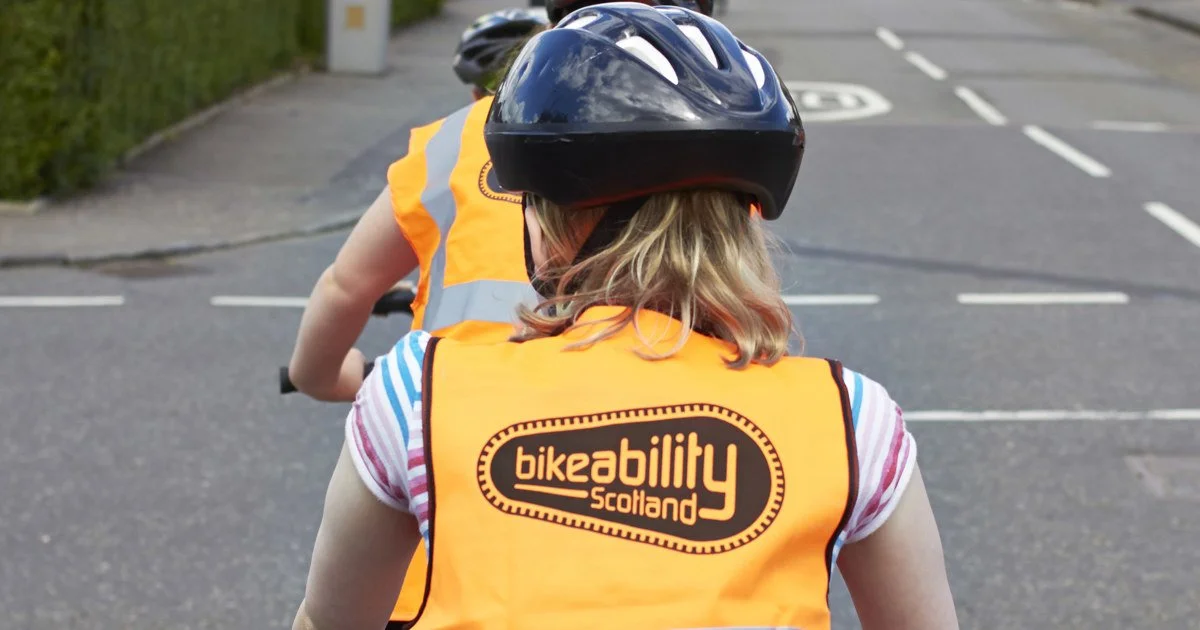
Could you serve your local school by becoming a Bikeability Instructor? You don't need to be a cycling expert to take part, anyone with experience and confidence riding a bicycle can do the training!

A “blessing of the backpacks” or ‘Back to School with God’ worship service are both fantastic ways to pray for and support young people and school staff at the start of a new school year.

For many churches that don’t have the capacity to develop work with their local schools, or perhaps the employed worker is already over-stretched, connecting members of the the congregations into existing programmes like MCR Pathways can make the world of a difference.

On school in-service days, pupils are off school, church halls are often empty, and parents are looking for ways to keep their children busy and safe, teenagers are also usually available to help. Is this not the perfect opportunity to organise and run a one-day Holiday Club?

School pupils facing prelims and/or SQA exams often get stressed. A local church offers Revision Classes in certain subjects in the run-up to school prelims and/or SQA exams. Maths and Science subjects are likely to be the most sought after. It could be run on a Saturday morning, as an after school group, or in an evening.

Parent Councils are made up of parents with children at the school, the Head Teacher and co-opted members from community groups with interest in the school (such as school chaplains).

There will always be teenagers who would rather avoid PE and will often forget their PE kit. There may also be young people in your local school with an unhealthy relationship with food and exercise. Why not consider serving the pupils and school by getting alongside them and helping?

Christian groups over lunchtime or after school are often - but not always - called “SU Groups” or “Scripture Union Groups.” There are around 400 such groups in Scotland.

Cosy Cafe is a fair trade youth cafe that meets in an evening in a church. It is a space for young people to develop relationships with each other and with God in a comfortable and fun environment. It can be run with activities like a games room, a ‘chill out room’ and of course a cafe selling hot chocolate with cream and marshmallows! There are also creative activities each week to help the young people to explore some of life’s big questions.

Cosy Cafe is a Fairtrade drop-in cafe that is set up in a school classroom during lunchtime once a week. It is a relaxed and safe space amidst the busyness of a school day, where pupils can sit and chat, play games, eat their lunch, buy Fairtrade products and drink hot chocolate. It provides an opportunity for members of the local churches to support the school and build relationships with pupils in a comfortable setting. Also, if there is currently a Fairtrade group within the school it provides a link and supports them.

Open the Book offers a structured programme of themed and dramatised Bible stories that fits comfortably into primary assemblies. Volunteers use drama, mime, costume and props (and possibly staff and pupils) to tell stories in a way that is lively, engaging and informative, initially from the “Lion Storyteller Bible.” This is “topped and tailed” by comments and a prayer from the Open the Book materials. A Headteacher may request a time of reflection instead of a prayer, which should be observed. It could also be used in an RME lesson.

A mentoring programme that targets P6 pupils can be established using the YMCA Scotland’s ‘Achieve Your Potential’ resource. This kind of project has supports many young people who benefited from having their own mentor. It can help them with the transition to secondary school and prepares them for their big move. The mentors are all volunteers from the local church. Although not a requirement, good volunteers are retired people bringing with them many years of life experience.

Exercise of any kind might physically be demanding but usually leaves participants feeling more confident, refreshed and motivated. The ‘School Run’ programme encourages children and adults to take exercise in the form of a run before the school day starts. It sets out personal targets for the individual and helps them to focus positively on improving their fitness.

In secondary schools extra tuition is offered after school by teachers in the form of Supported Study Groups; especially as exams get nearer! At the end of a busy teaching day members of staff are often pleased to have someone who can circulate as the pupils work, offering advice and direction. In subjects such as Art additional help can be provided as an extra pair of hands to help with framing finished pictures. Sometimes volunteers have been invited to go on trips with the department they have helped too.

FAST (Families and Schools Together) is a research based initiative funded by Save the Children. FAST groups encourages school staff, parents and community members to work together to build the link between the school and the local community, while also strengthening links within a family unit.

Schools can apply for fair-trade status (there are now over 800 Fairtrade Schools in the UK). This is something a church is well placed to support – not least because many churches feel strongly about social justice and the importance of fair trade. In order to become a fair trade school, the school needs to set up a fair trade group, write a fair trade policy, use and promote fair trade products, learn about fair trade and run fair trade events throughout the year. The Fairtrade Foundation website has a lot of helpful information.

Story Sacks focus on telling one particular Bible story through a wide variety of methods. They comprise of at least two story or picture books, props and/or dressing up clothes to act it out, colouring pages and worksheets, pictures, games, toys, and perhaps even a puppet. They also contain a Teachers Folder which gives details of items in the sack and ideas of how each can be used.

Golden Time is run by many schools as a special time at the end of the week for pupils to engage in a different learning activity. It is often a reward for good behaviour, and can be limited if behaviour has been poor. Schools like to provide a range of options, and what you might offer is only limited by your skills and imagination. Examples include: knitting, sketching, dance, Bible story-telling club, model making, athletics, baking, sign-language, growing vegetables, film making, chess, face-painting.

It can sometimes be difficult to bridge the gap between school youth work and church based youth work. You often meet young people in school for the first time and it is a great opportunity to build trust and get to know them, but it is out of the school environment where support is often required. After school clubs in churches do not have to be Bible studies. Nor do they have to clubs where God is last (or never) on the agenda.

A breakfast club is an excellent way of serving a whole school community. One example of this working well began in a secondary school which already enjoyed a positive relationship local youth-workers and chaplains. As part of regular meetings with senior management they were discussing the needs of pupils. One issue they felt they could commit to helping with was the number of young people coming to school early. They usually came without breakfast and by the time classes started were bored, hungry and unsettled.
A local musician, supported by his church, offered himself to a secondary school to be used in “any way they wished”. He began by putting on a small lunchtime concert every Thursday in the concourse / social-area of the school, and encouraged participation from other musical students. The response was excellent, and over time, staff consistently commented on the benefits saying “the atmosphere is better when you are in here”.

If you are looking for opportunities to serve your local school and you enjoy sports, it is possible to combine the two. Most schools have football or other sports teams which often need volunteers, either to run them or to help out. In addition, most schools would be open to new clubs if you are able to set up a sports club the school does not offer.

Many schools across Scotland have groups that meet over lunchtime or after school which look at exploring the Christian Faith. SU Scotland runs over 450 of these “SU Groups” in both Primary and Secondary schools across the country. Each group is different but they all aim to create a safe place where every pupil (of any faith or none) is welcomed and respected; a place where Christian values are modelled.

Drama is an excellent medium for engaging young people in thinking about big ideas. At its heart, drama is about telling stories. Through participation children grow in confidence, gain skills in presentation and learn how to use their bodies and voices. It also promotes trust, collaboration and listening skills.
Across three articles, Fiona Stewart, Foolproof Creative Arts, explains how to start, plan and run an after-school drama club. Below the first part which highlights what to keep in mind before starting a drama club.

Many schools have large and thriving music departments with all kinds of groups and ensembles for pupils to participate in. In one school, this began to cause difficulties as there was no space large enough to accommodate all the pupils involved in the school concert as well as all the parents, family and friends who wanted to attend.

Drama is an excellent medium for engaging young people in thinking about big ideas. At its heart, drama is about telling stories, and through participation children grow in confidence, gain skills in presentation and learn how to use their bodies and voices. It also promotes trust, collaboration and listening skills.
Fiona Stewart, Foolproof Creative Arts, explains how to start, plan and run an after school drama club. In this article, the focus lies on running your club.

Drama is an excellent medium for engaging young people in thinking about big ideas. At its heart, drama is about telling stories. Through participation children grow in confidence, gain skills in presentation and learn how to use their bodies and voices. It also promotes trust, collaboration and listening skills.
Across three articles, Fiona Stewart, Foolproof Creative Arts, explains how to start, plan and run an after-school drama club. Below the first part which highlights what to keep in mind before starting a drama club.

Organising a meal for your school’s Management Team is a great way to grow a relationship between the school and your church. It’s wonderful to be able to say thank you to staff for serving the students, and for your church members who know some staff in the school to have a conversation which is more than just “hi, thanks, bye”.
GRAND IDEAS:

Many young people are growing up without any direction on how to navigate their way through the important decisions about how to handle their money. CAP Money Youth is designed to change all of that. It is a very simple but very effective money management course which has now been adapted for secondary school pupils.

Free school meals make a huge difference to 130,000 children in Scotland, but when schools are closed so are the kitchens... MakeLunch.org.uk is a network of churches working to fill the holiday hunger gap.

Many in S5 and S6 are investigating life’s big questions in a new and critical manner, trying to make sense of the world. Big Questions days offer an opportunity for students to unpack and challenge current world views in a conference-style environment, which can help to prepare for the transition from school to work or university.

Prayer spaces in schools are a great way of getting young people to think about prayer, and are a creative way of running an RO event – as part of an activity in the informal curriculum to which pupils opt in.

This project varies in size, time commitment and school interaction, and depends upon what the school is willing to do, and what you are able to do.

Bible Alive is a programme to teach children in P5-7 the storyline of the Bible in a series of interactive lessons using props, costumes, music, drama, storytelling, puppets and more. It is flexible (people train to use Bible Alive and then develop their own programme) and the whole Bible is usually taught in schools in one hour lessons over 5-8 weeks.

Seasons for Growth is an excellent way of serving young people in your area who are dealing with issues of loss and change. For example, the death of a parent or friend, or the loss associated with divorce, or even moving house. It’s an established and respected way of working in schools across the UK, with significant impact and good training.

At present there are around 16 Scripture Union Scotland Associate Workers operating in towns throughout Scotland. Each one is employed by groups of local churches to be available to the schools and to young people in the area. This human resource is valued by the school, by churches and by young people themselves and regularly offers some of the following:
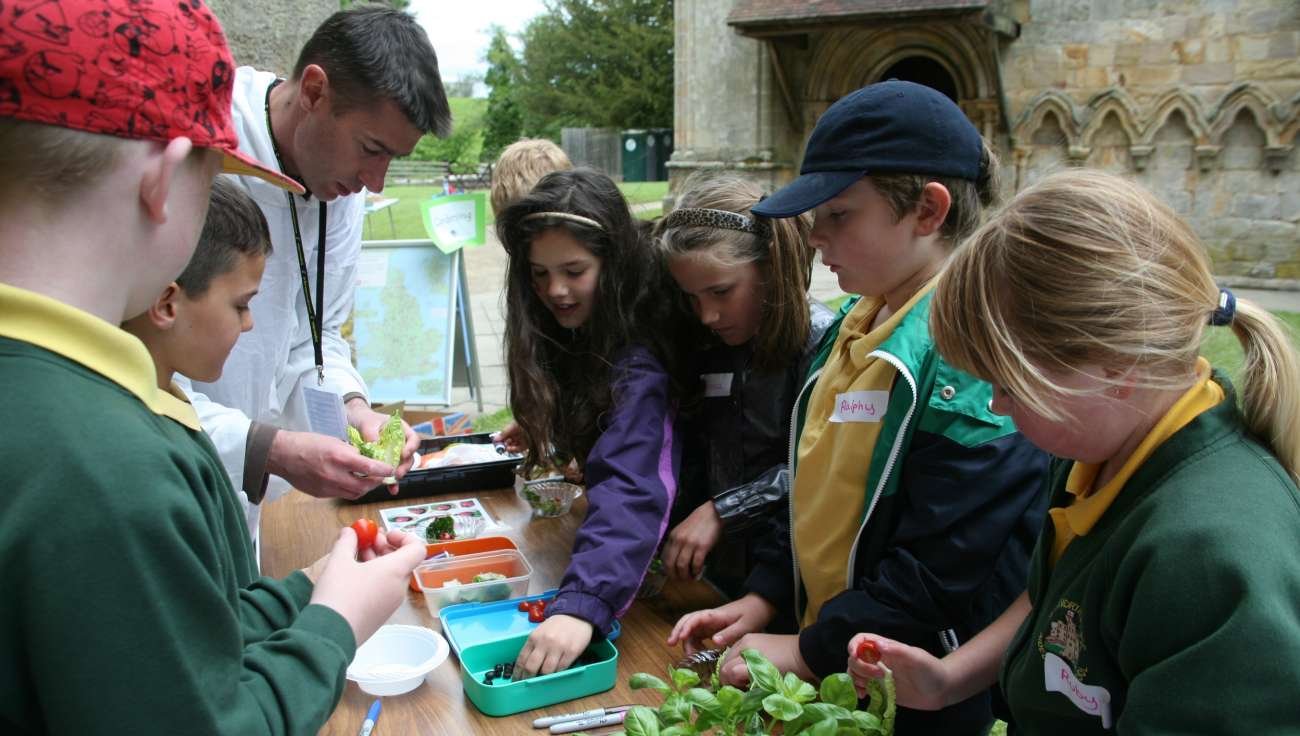
Lifepath is an initiative to help Christians in local communities organise an event in which primary school pupils have the opportunity to explore the Christian faith through the ‘lifepath’ of a well known Christian from history with a link to their location.

Easter Code is an opportunity to invite local school(s) to bring P6 and P7 classes to your church to take part in an interactive exploration of the Easter story. There is a resource book and CD ROM which outline the 2 hour event, giving a plan for the day, clear instructions on how each ‘station’ should run and what materials are required. The book also spells out how the content of the event fits in with the curriculum and gives a feedback form template for the teachers.

Sometimes it feels that there is more fluff than substance to Christmas time and that the deeper meaning of Christmas is lost. While still enjoying all the “fun” aspects of our Western Christmas, Bubblegum 'n' Fluff provides churches and chaplains a way to help primary 6 children to uncover the real message of Christmas; the celebration of God's incarnation in the person of Jesus. The event duration is 2 hours and features games, sketches, spontaneous drama, craft ideas, storytelling, theme song, worksheets, and much more.

A chaplain may be the one person every under-18 in an area sees both in the corridors and classrooms of their school and in the streets and homes of their community. Uniquely, the chaplain may also be the only individual who transitions with them from primary to secondary school. What a strategic place to be in!

Primary and secondary schools across Scotland are beginning to engage with the processes of the ‘Rights Respecting School Award’ (RRSA).
This UNICEF initiative is being heavily promoted by the Scottish Government and fits well with the capacities inherent in Curriculum for Excellence and the current schools’ focus on issues such as Restorative Justice, Health and Wellbeing, and Citizenship. Based on the UN Charter of the Rights of the Child, it encourages schools to bring staff, pupils and community together to explore rights and responsibilities as well as to create core values and ethos for a school. It’s an ideal area for the involvement of chaplains, Religious Observance teams and churches.

Inspire Aspire is a national award that young people can achieve at gold, silver or bronze level. It can be run as part of either RME or PSHD. Pupils pick a ‘hero’, such as a sports person or figure from religion or history, complete a poster about that person’s life and values and deliver an oral presentation based on their research. They also have to complete a reflection about their own lives and values.